
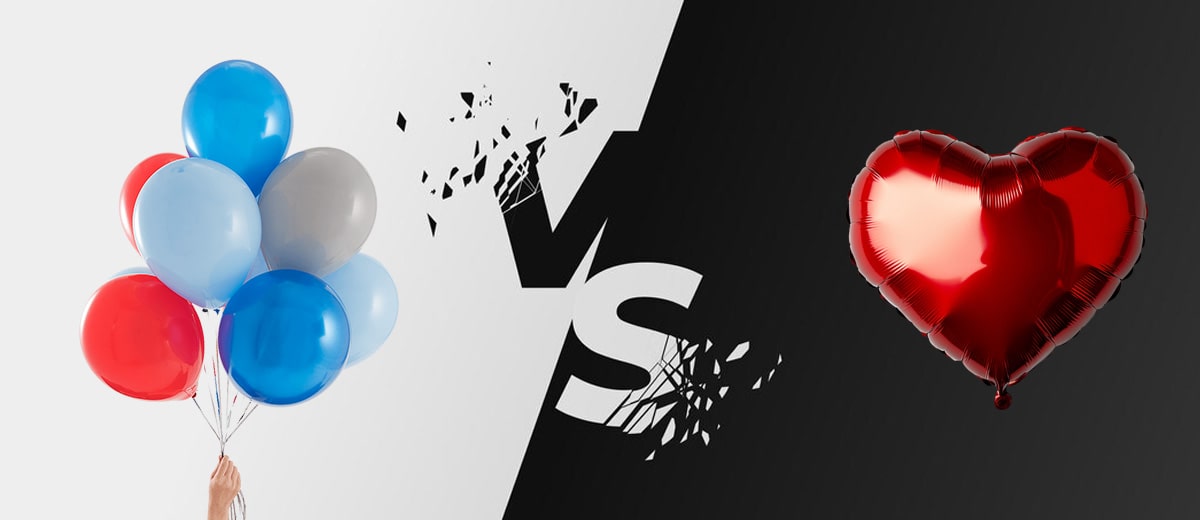
Balloon decorations continue to enjoy unwavering popularity – at weddings, corporate events, and home birthdays alike. However, choosing the right type of balloons can be a challenge, especially for beginners. Latex balloons or foil ones – what are the differences, when to use them, what are their properties, and why are latex balloons considered the better decorative choice? Find out in this comprehensive guide.
Key Information
- Types of balloons – introduction
- Latex balloons – characteristics
- Foil balloons – characteristics
- Latex vs. foil balloons – key differences
- Use in decorations – which to choose?
- Environmental aspect and biodegradability
- Recommendations for beginner decorators
- FAQ
Types of balloons – introduction
In the world of decorations, the two most common types of balloons are latex and foil. Both have their advantages, but their purpose and properties differ significantly.
Choosing the right balloon is crucial not only for aesthetics but also for the durability of the decoration, costs, and event logistics.
Latex balloons – characteristics
Latex balloons are made from natural latex derived from the rubber tree. They are extremely flexible, environmentally friendly, and available in a wide range of colors and shapes.
Main features:
- Biodegradable – decompose naturally, like leaves
- Matte or semi-gloss finish
- Can be filled with helium or air
- Ideal for creating garlands, arches, balloon columns, and sculptures
- Low unit cost
Drawbacks:
- Shorter floating time when filled with helium (approx. 8–24 hours)
- More sensitive to weather conditions
Foil balloons – characteristics
Foil balloons are made from thin metallized film, usually polyester. They are characterized by high gloss and vibrant colors.
Main features:
- Impermeable to helium – longer floating time (up to 7 days)
- Unique shapes – numbers, letters, characters
- Striking shine and strong colors
Drawbacks:
- Not biodegradable
- More expensive
- Not suitable for large structures
Latex vs. foil balloons – key differences
Below is a comparison of the most important parameters:
| Feature | Latex Balloons | Foil Balloons |
|---|---|---|
| Material | Natural latex | Polyester film |
| Ecology | Biodegradable | Non-biodegradable |
| Floating time | 8–24h (helium) | 3–7 days (helium) |
| Shapes | Classic, round, hearts, punchballs, modeling balloons | Numbers, letters, figures |
| Durability | Medium | High |
| Price | Low | High |
Use in decorations – which to choose?
For most balloon decorations, including garlands, arches, or event backdrops, latex balloons are a far better choice. Their flexibility and availability in various sizes allow for creative three-dimensional forms.
Foil balloons, on the other hand, are ideal as a complement – for creating numbers, letters, or personalized accents. They look great in photos but cannot replace the structural possibilities of latex.
Environmental aspect and biodegradability
In an era of heightened environmental awareness, it’s worth emphasizing that latex balloons made from natural rubber are biodegradable. They decompose in the environment within a few months. In contrast, foil balloons can remain in ecosystems for hundreds of years.
For environmentally responsible decorators, latex is a choice that is not only aesthetic but also ethical.
Recommendations for beginner decorators
If you’re just starting your decorating journey, go with latex balloons:
- easy to work with, inexpensive, biodegradable,
- allow for creativity and variety of forms,
- pair beautifully with floral elements and lighting.
Use foil balloons as an additional element – to personalize the setup, e.g., with a birthday number or the celebrant’s name.