
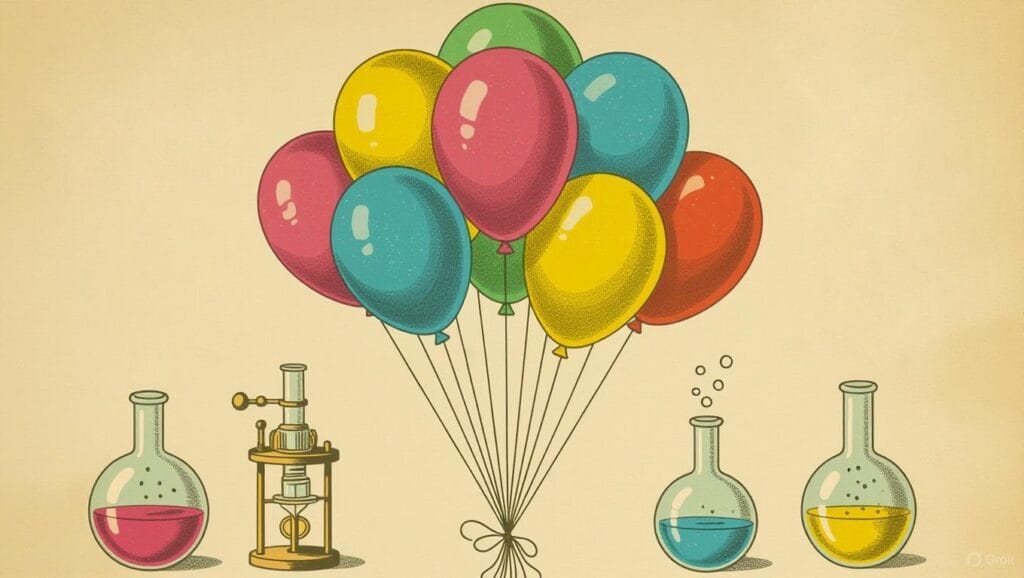
Key Information:
- Definition and Origins of Latex Balloons
- Early Scientific Experiments
- Key Inventors and Technological Development
- Michael Faraday: Pioneer of Balloons
- Thomas Hancock: First DIY Balloons
- J.G. Ingram: The First Commercial Balloon
- Neil Tillotson and Decorative Balloons
- Advances in Production Technology
- Applications of Latex Balloons
- FAQ
Definition and Origins of Latex Balloons
Latex balloons are flexible, inflatable objects made from natural latex that, when filled with helium or air, take on the shape of a sphere, teardrop, or more complex forms. They are airtight with a small opening for inflation, making them ideal for decoration, scientific experiments, or industrial applications. The history of inflatable objects dates back to antiquity, long before latex balloons were invented. In ancient Egypt, Mesoamerica, and Europe, indigenous people used animal bladders — such as pig, cattle, or intestinal bladders — to create primitive balloons. These natural membranes were mainly used for children’s play or rituals, but their lack of elasticity limited durability. According to science historians, in the 16th century, Spanish explorers reported Aztec customs of using air-filled animal bladders in ceremonies.Early Scientific Experiments
During the Enlightenment, scientists like Galileo Galilei in 1638 used animal bladders to measure air density — inflating and weighing them, marking one of the earliest scientific uses of balloon-like structures. These experiments laid the foundation for understanding gas properties.Discovery of Rubber and Early Experiments
The key raw material for latex balloons is natural rubber, harvested from the Hevea brasiliensis trees in the Amazon. Indigenous peoples of South America had been using it for centuries to create waterproof items. Europeans first encountered rubber in the 18th century through expeditions, such as Charles de La Condamine’s in 1735. However, raw rubber was sticky and unstable — it melted in heat and cracked in cold — limiting its practical applications. Early European experiments focused on its elastic properties, but without stabilization, it remained unreliable.
Key Inventors and Technological Development
The development of latex balloons was the result of the work of many inventors and innovators who transformed a simple concept into a global phenomenon.Key Inventors and Technological Development
The development of latex balloons was the result of the work of many inventors and innovators who transformed a simple concept into a global phenomenon.Michael Faraday: Pioneer of Balloons
The year 1824 marks the birth of the first rubber balloons. English physicist Michael Faraday, working at the Royal Institution in London, created balloons from raw rubber for experiments with hydrogen. Faraday cut two sheets of rubber, sprinkled them with flour to prevent sticking, glued the edges together, and filled them with hydrogen. These balloons were used to study the diffusion of gases and their buoyancy. Faraday, known for his discoveries in electromagnetism, did not foresee the toy potential—it was a laboratory tool, but his work paved the way for further innovation.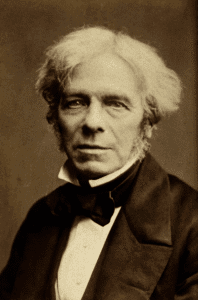
Thomas Hancock: The first DIY balloons
In 1825, rubber pioneer Thomas Hancock introduced the first DIY balloon kits. The kit included a bottle of rubber solution and instructions for forming balloons. These “toy balloons” were sold mainly as novelties, but their fragility limited their popularity. Hancock, founder of the first rubber factory in Great Britain, made them widely available to the general public.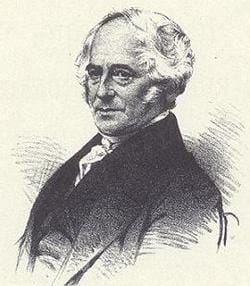
Charles Goodyear: Przełom w wulkanizacji
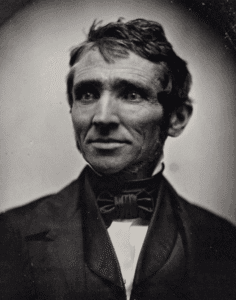
Przełomem była wulkanizacja w 1839 roku, wynaleziona przez Charlesa Goodyeara. Proces ten, mieszający kauczuk z siarką i podgrzewający, czynił materiał elastycznym, trwałym i odpornym na temperaturę. Bez wulkanizacji balony lateksowe nie mogłyby utrzymywać kształtu długo. Goodyear opatentował to w 1844 roku, co otworzyło drogę do komercyjnych zastosowań.
J.G. Ingram: The first balloon
In 1847, J.G. Ingram in London produced the first latex balloons from vulcanized latex from rubber trees. These balloons were more elastic and suitable for sale as toys, but production costs limited their mass distribution.
Neil Tillotson and Decorative Balloons
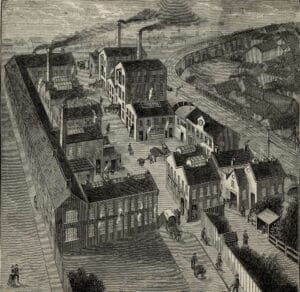
While working at his home in Watertown in 1931, Neil Tillotson came up with the idea of creating a latex balloon in the shape of a cat’s head. He used a cardboard mold he cut out himself to make it, and then designed and produced the first 15 pieces. They were intended for a Patriots’ Day parade. In order to meet the deadline, Neil enlisted his family to help, and after returning from work at Hood Rubber, he continued to produce balloons in the comfort of his own home.
Advances in Production Technology
In the 20th century, production processes were refined with automation and new materials, enabling balloons in various sizes, shapes, and colors. In the 1930s, commercial helium inflation was introduced, allowing balloons to float longer. Balloons became a staple at carnivals and parties. After the war, in the 1950s, balloons became symbols of joy. In the 1970s, foil balloons were introduced, but latex remained popular due to cost and biodegradability. Since the 1980s, latex balloons have evolved through production automation.Applications of Latex Balloons
Latex balloons are used across many fields, from science to entertainment and advertising.- Scientific and Industrial Uses: Though specialized balloons are used for atmospheric research, similar latex balloon designs with attached sensors (e.g., temperature, pressure) or GPS could be used for experiments or educational projects — though not common. Latex balloons can demonstrate physical phenomena like gas expansion (including helium), but this isn’t their primary scientific role.
- Party Decorations: Latex balloons are essential for event decor — weddings, birthdays, baby showers, and more. Helium-filled, they create stunning bouquets, garlands, or arches that enhance any occasion.
- Advertising and Marketing: Custom-printed balloons with company logos are a popular promotional tool at events and trade shows. Personalization boosts brand visibility.
FAQ – Frequently Asked Questions:
Who invented latex balloons?
Michael Faraday created the first rubber balloons in 1824 for hydrogen experiments. J.G. Ingram developed latex balloons in 1847, and Neil Tillotson introduced mass production in the 1930s.
What are the main uses of latex balloons?
Latex balloons are used for party decorations, scientific experiments, and advertising. They are versatile and available in many variants.
What are the 2025 trends in latex balloons?
In 2025, trends include biodegradable balloons, pastel colors, metallic finishes, personalized prints, and add-ons like LED lighting.
Are latex balloons safe for allergy sufferers?
Latex can trigger allergies, so sensitive individuals should carefully check product composition before use.
How long do helium-filled latex balloons float?
Latex balloons with helium float for 12–24 hours, depending on latex quality, size, and environmental conditions like temperature.
Are latex balloons eco-friendly?
Natural latex balloons are biodegradable and decompose within 6–12 months, but require proper disposal to avoid environmental harm.